Lucky Spin Joy
- 4.0
- Rating
- 10.00K
- Installs
- Free
- Price

 Analysis by App-foxy
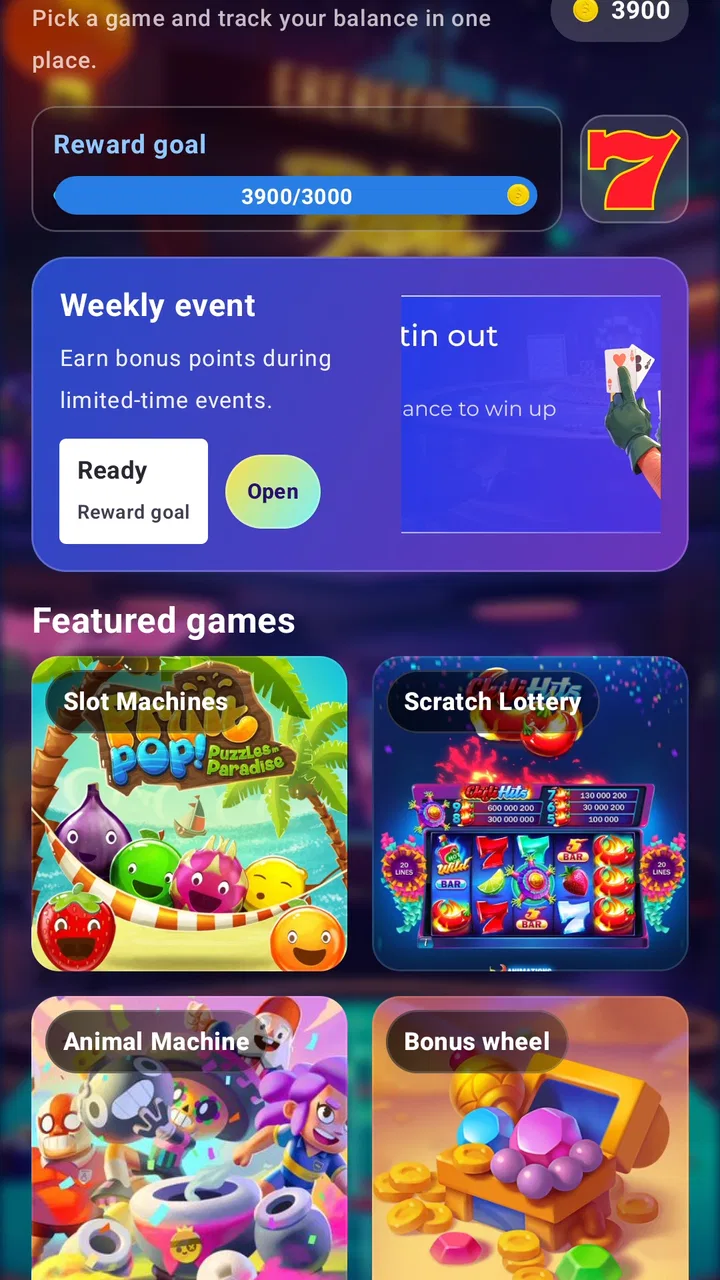
Lucky Spin Joy caught my attention because it turns several familiar casual activities into one bright game lobby. Instead of opening separate games for a slot-style session, a scratch card, or a bonus wheel, I found them gathered in one colorful place. That makes the first few visits easy to understand: tap into the activity that looks appealing, play for a short while, and move on when the novelty starts to fade.
My overall impression is that this is best treated as a light entertainment game rather than a deep progression experience. It is free to download, rated for Everyone 10+, and developed by Zhuoyu Jee Limited. The current release is version 2.0.9, with support beginning at Android 8.0. Those details make it accessible to many casual players, but they do not automatically make it a good long-term fit. The more important question is whether the compact collection of activities continues to feel worthwhile after the colorful first impression has passed.
What the first week feels like
During the first week, the strongest part of Lucky Spin Joy is the low barrier to entry. I do not need to learn a complicated control scheme or understand a large map before playing. The lobby presentation points me toward its main attractions, and each activity is built around a familiar, quick interaction. That simplicity works especially well when I have only a few minutes and want something more active than scrolling through a social feed.
You May Also Like

 Pandora - Music & Podcasts
Pandora’s Music Is Easy to Start, but Harder to Recover
Pandora’s strength is its low-effort path from a seed to a station. Its weak spot is how much confidence it asks you to place in connection, setup, and quiet recovery.

 8 Ball Pool
 Is Built on Rivalries, Rematches, and Routine
A close look at the rivalries, rematches, shared routines, and unanswered safety questions that turn a quick pool match into a persistent mobile community.

 Samsung Music
’s Quiet Strength Is Playing What You Already Own
Its reach comes less from spectacle than from dependable access to a personal library. That simplicity is both the app’s strongest retention engine and its ceiling.

 AccuWeather: Weather Radar
AccuWeather Review: A Quick, Clear Forecast for Everyday Decisions
For everyday plans, the best forecast is the one you can understand quickly. AccuWeather makes rain timing, radar, and local conditions easy to act on, with a few trade-offs.

 Hill Climb Racing
Why Hill Climb Racing Still Turns Crashes Into One More Run
A tiny car, a bumpy hill and one more upgrade: Hill Climb Racing keeps resurfacing because its simple chaos makes every near-miss feel personal.

 AliExpress - Shopping App
AliExpress Makes Global Shopping Feel Personal, but Shoppers Bear the Risk
AliExpress turns a global marketplace into a pocket-sized discovery engine. Its reach is useful, its shopping loop compelling, and its trade-offs easy to miss.
More From Our News Desk
View All News


The slot-style game provides the most recognizable starting point. It is easy to understand visually, which makes it suitable for someone who does not usually play larger mobile games. The scratch-card element offers a different kind of interaction, while the lucky bonus wheel adds another short pause-and-see moment. Moving between them prevents the opening session from feeling like one identical screen repeated without change.
I also think the lobby format matters more than it first appears. In a typical casual game, the player may spend time navigating menus, searching for a mode, or waiting through a long introduction. Here, the central appeal is the ability to choose quickly. If I am in the mood for a brief spin, I can focus on that. If I want a more tactile action, the scratch-card idea gives the session a different rhythm. This makes the game a reasonable companion for short breaks.
That convenience is also where the first important trade-off appears. A collection of familiar activities can feel generous at the beginning, but it may not provide the same sense of discovery as a casual game built around one evolving mechanic. The first sessions benefit from variety; later sessions depend on whether that variety is enough by itself. Players who enjoy simple repetition may settle in comfortably, while players who need new goals, story, or skill development may reach the limits quickly.
Small-session use works best
A realistic use case is a short waiting period: I might open the game while waiting for an appointment, play a few rounds, try the wheel, and close it before the session becomes aimless. It also suits a quiet evening when I want something visually cheerful but do not have the attention for a strategy game. The lack of a demanding learning curve means I can return after several days without having to remember a complicated system.
My practical advice is to treat the first week as a sampling period rather than immediately making it part of a daily routine. Try each area at different times, notice which activity actually holds your attention, and avoid assuming that the most colorful screen is necessarily the most satisfying one. This simple test helps separate genuine enjoyment from the temporary appeal of seeing several game types together.
The game has attracted over ten thousand installs and holds a four-point average from around four hundred seventy ratings, with roughly ninety-four written reviews. Those figures suggest that it has found an audience, although they say less about whether it will suit a particular player for months. I would use them as a sign that the concept is understandable to other players, not as a guarantee of lasting entertainment.
Who is likely to enjoy it
I would recommend it first to casual players who like chance-themed presentation, bright interfaces, and activities that can be completed in short bursts. It may also appeal to someone who wants a single lobby instead of keeping several small games installed. The age rating of Everyone 10+ gives families a useful starting point when deciding whether the tone is appropriate, though I would still encourage adults to explain that game-like rewards are entertainment rather than real-world winnings.
On the other hand, I would not choose it for someone who wants a strong sense of mastery. If your favorite casual games involve building a town, solving increasingly difficult puzzles, competing through precise timing, or unlocking a substantial narrative, this experience may feel too dependent on repeated chance-based actions. A focused puzzle game would probably offer better value for that type of player.
Does the appeal survive from month to month?
The month-to-month question is more difficult. Lucky Spin Joy has a useful advantage over a single-purpose mini-game because its lobby gives me several places to go. When one activity feels repetitive, I can switch to another. That rotation can extend the useful life of the app, particularly for players who enjoy relaxed, low-commitment sessions rather than a fixed challenge.
Still, variety is not the same as depth. Slots, scratch cards, and a bonus wheel all rely on short cycles of anticipation and result. Their presentation may differ, but the emotional pattern remains similar: make an input, wait for the outcome, and decide whether to try again. After the initial curiosity, I began judging the game less by its colors and more by whether I had a reason to return. That is the point at which a casual lobby either becomes a habit or becomes something I open only occasionally.
For me, the strongest recurring use is as a small break, not as a main game. I can imagine keeping it installed for those moments when I want a quick distraction and do not want to commit to a longer session. I am less convinced that it can occupy a daily gaming routine on its own. Players who prefer a predictable, relaxing ritual may find that acceptable; players who expect regular new objectives may want a different app alongside it.
A sensible way to build a habit
If I were recommending a sustainable routine to a friend, I would suggest setting a natural stopping point before opening the game. For example, choose one activity, try the wheel once, and then decide whether the session was enjoyable enough to continue. This keeps the game in the category of a short pastime instead of letting repeated attempts fill time without adding much satisfaction.
Another useful approach is to rotate by preference rather than by obligation. Use the scratch-card activity when you want a more direct interaction, the wheel when you want a single quick event, and the slot-style area when you are comfortable with a more repetitive rhythm. This gives the lobby a purpose and makes it easier to notice which parts genuinely retain your interest. If you find yourself opening every section only because it is there, the variety is no longer helping.
I would also avoid judging the game solely by the excitement of an early session. A new interface naturally feels more interesting before I understand its limits. The better test is whether I still enjoy opening it after the screens are familiar and the novelty of switching between activities has disappeared. That test is especially important for anyone deciding whether the app deserves permanent storage space.
Where alternatives may be stronger
Compared with a dedicated scratch-card or wheel game, this title has the convenience of combining several formats. I do not need to choose one narrow style before launching it. Compared with a deeper casual game, however, it offers less obvious room for skill, planning, or long-term construction. A puzzle game may reward careful thinking more consistently, while a collection or simulation game may give a clearer reason to return over several weeks.
The right choice depends on what kind of satisfaction I want. If I want quick visual stimulation and familiar chance-style actions, the lobby is more convenient than maintaining several separate downloads. If I want measurable improvement, meaningful decisions, or a campaign that develops over time, I would choose a dedicated alternative. Lucky Spin Joy is not weakened by being simple, but its simplicity needs to match the player’s expectations.
Maintenance, friction, and the reasons fatigue can appear
The maintenance burden is relatively light from a player’s point of view because the central concept is easy to remember. Returning after a break should not require relearning controls or reconstructing a complicated strategy. That makes it more forgiving than many progression-heavy games, where missing time can leave me confused or behind. The current version, 2.0.9, is the release I encountered, and the Android requirement of 8.0 keeps the technical entry point reasonably broad for compatible devices.
However, low learning effort does not mean zero maintenance. I still need to decide whether the app deserves attention among other casual games. The main maintenance task is managing my own expectations: this is a free casual title built around compact activities, not a replacement for a full gaming hobby. If I keep demanding new layers from it, the experience will feel disappointing even when it is performing exactly as a short-session game should.
One practical friction is the possibility of repetition. Because each activity is easy to understand, repeated visits can become predictable. The same accessibility that helps a new player also reduces the amount of discovery available later. I noticed that switching sections can delay fatigue, but it does not necessarily remove it. Once the lobby’s overall rhythm becomes familiar, I need to decide whether the simple interaction itself remains pleasant.
Another source of fatigue is the emotional sameness of chance-based play. Even though the screen changes from a slot-style activity to a scratch card or wheel, the player is still waiting for an outcome. That can be relaxing in moderation, but it may feel passive to people who want their decisions to matter. If you prefer games where success comes mainly from practice, this design may become tiring sooner than a timing, word, or logic game.
I would also be cautious about turning any reward-focused game into an automatic checking habit. The most useful boundary is to open it intentionally, play because the interaction is enjoyable, and close it when it stops being fun. That is not a criticism unique to this title; it is simply the healthiest way I found to approach a lobby built around repeated spins, cards, and bonuses.
How to tell whether it has earned a permanent place
After the first several sessions, I would ask three simple questions. Do I choose it over another casual game when I have a short break? Do I enjoy at least two of its activities, rather than relying on one novelty? And do I leave a session feeling entertained instead of merely having filled time? If the answer is yes, the compact format may be exactly what I need. If the answer is no, keeping it installed is unlikely to improve the experience.
This is also where the free price helps. I can try it without treating the download as a major commitment, and I can remove it if the recurring value does not appear. The absence of a purchase cost makes experimentation easy, but it should not be mistaken for proof of quality. My time is still the real investment, so the game needs to return enough enjoyment to justify repeated openings.
For families, I would frame it as a colorful casual game for brief entertainment, not as a lesson in probability or a substitute for board games that reward planning. For adults who enjoy relaxing chance-themed interfaces, it can work well as a small diversion. For competitive players, puzzle fans, or anyone seeking a substantial campaign, I would point toward a more focused alternative instead.
My long-term verdict on Lucky Spin Joy
After looking past the bright lobby, I see a game with a clear but limited role. Lucky Spin Joy succeeds when I want quick access to several simple activities and do not want a demanding commitment. Its combination of slots, scratch cards, and a lucky wheel gives the opening experience enough variety to feel welcoming, and the casual format makes returning after a break straightforward.
Its lasting weakness is that the same activities can begin to blur together once the first-week curiosity has gone. The lobby solves the problem of choosing between separate mini-games, but it does not automatically create long-term depth. I can extend its useful life by rotating activities and keeping sessions short, yet those habits manage repetition rather than eliminate it.
My recommendation is therefore specific: install it if you enjoy colorful, chance-themed mini-games and want a free option for brief breaks. Give it a fair trial across its different sections, then keep it only if the interaction remains enjoyable after the presentation becomes familiar. Skip it if you need strategy, skill growth, story, or a strong month-to-month progression system.
In the end, I would keep Lucky Spin Joy as an occasional distraction rather than make it the center of my mobile gaming routine. It earns space for players who value convenience and quick variety, but it has to pass a personal habit test before it deserves permanent space. Its real strength is easy entertainment; its real limitation is how quickly familiar chance-based loops can lose their pull.
FAQs for Lucky Spin Joy
01What is Lucky Spin Joy and how does it work?
Lucky Spin Joy is a casual spin-and-reward game built around virtual wheels, daily bonuses, missions, and collectible rewards. After installing it, players can usually spin by using free turns earned through regular logins, tasks, or in-game progress. The experience is designed for short sessions and entertainment rather than skill-based competition. Available features and reward systems may vary depending on your device, region, and app version.
02Is Lucky Spin Joy free to download and play?
Lucky Spin Joy can generally be downloaded and played without an upfront purchase, making it accessible to users who want a quick casual game. However, free games may include advertising, optional in-app purchases, or limited attempts that encourage waiting or watching videos for additional spins. Before confirming any transaction, review the purchase details carefully and check your device’s payment settings, especially if children also use the phone or tablet.
03Can rewards from Lucky Spin Joy be converted into real money or withdrawn?
You should not assume that the coins, points, prizes, or other rewards shown in Lucky Spin Joy have real-world cash value. In many spin-based games, rewards are virtual items intended for use inside the app and cannot be withdrawn. If the app advertises cash-out options, read the eligibility rules, minimum thresholds, verification requirements, supported payment methods, and regional restrictions carefully before spending time or money pursuing a reward.
04Does Lucky Spin Joy require an internet connection?
Lucky Spin Joy may need an active internet connection for important functions such as loading advertisements, synchronizing progress, receiving daily bonuses, updating reward balances, or connecting to its servers. Some screens might open while offline, but spins, missions, and account-related features may not work correctly without connectivity. For the smoothest experience, use a stable Wi-Fi or mobile-data connection and install updates when they become available.
05Is Lucky Spin Joy safe to install and what permissions should I check?
Before installing Lucky Spin Joy, download it only from an official app store and verify the developer name, ratings, reviews, update history, and privacy information. Pay attention to the permissions requested during installation; a simple game should have a reasonable explanation for access such as network connectivity or notifications. Avoid modified APK files and be cautious if the app requests sensitive access that does not appear necessary for its core gameplay.
Pros
- Simple tap-based gameplay that is easy to understand from the first spin.
- Short sessions make it convenient for quick breaks or casual play.
- Bright visuals and celebratory effects give spins an entertaining feel.
- Progress and reward elements can encourage regular play.
- Usually requires little storage and runs well on many mobile devices.
Cons
- Rewards are based heavily on luck
- so progress may feel inconsistent.
- Frequent ads can interrupt play
- especially after completing actions.
- In-app purchases may be tempting for users seeking faster rewards.
- Gameplay can become repetitive once the initial excitement fades.
- Some features may require an internet connection to function properly.

Lucky Spin Joy
Gallery